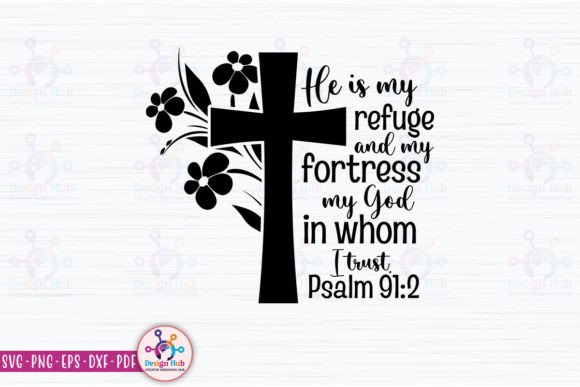
He is My Refuge and My Fortress, My God
In the landscape of digital crafting and small business operations, finding a design asset that balances spiritual depth with technical versatility is essential. The phrase "He is My Refuge and My Fortress, My God" serves not just as a decorative element but as a foundational statement for faith-based merchandise, home decor, and personal branding. For entrepreneurs, hobbyists, and content creators, integrating this specific SVG design into your workflow requires more than just downloading a file; it involves understanding its application across various mediums, ensuring technical compatibility, and maintaining consistency in quality control.
This resource is designed to streamline the production process for items ranging from hoodies and t-shirts to wood signs and tumblers. By providing high-quality vector formats such as SVG, PNG, EPS, PDF, and DXF, it allows for seamless integration into professional design software and cutting machines. This guide outlines how to effectively utilize these assets to enhance your creative output while minimizing technical friction.
Understanding the Asset: Technical Specifications and Workflow Integration
The core value of this design lies in its multi-format availability. In a practical workflow, the choice of file format dictates the subsequent steps in production. Understanding the strengths of each format ensures that you are using the right tool for the specific job, whether you are preparing a large-scale print run or a single custom order.
- SVG (Scalable Vector Graphics): This is the primary format for most digital cutting machines like Cricut and Silhouette. Because it is vector-based, the design remains crisp regardless of size. When working on projects involving vinyl decals for tumblers or car windows, starting with the transparent SVG file ensures precise cutting paths without pixelation.
- PNG (Portable Network Graphics): With a 300 DPI resolution in RGB color mode, these transparent images are ideal for direct-to-garment printing or sublimation workflows where color fidelity is paramount before conversion to CMYK for professional printing. They serve as excellent placeholders during the mockup phase.
- EPS and DXF: These formats are critical for users operating laser cutters or industrial plotters. DXF files are particularly useful for architectural or woodworking projects, such as creating intricate wood signs. EPS files offer broad compatibility with Adobe Illustrator and CorelDRAW, allowing for advanced manipulation of the vector paths if customization is required.
- PDF: While often used for final proofing, PDFs containing vector data can also be imported into many design programs. They are useful for sharing designs with clients who need to view the layout without editing capabilities.
Pre-Production: Preparation and Compatibility Checks
Before moving to the manufacturing stage, proper preparation is key to avoiding costly errors. The transition from digital asset to physical product involves several checkpoints.
Software Compatibility: Ensure your design software supports the imported file type. If you are using the DXF or EPS files in older versions of CAD software, verify the layer structure. Complex vector designs can sometimes lose their hierarchy upon import, requiring manual regrouping. Always open the file in a non-destructive editor to inspect the nodes and curves.
Color Management: Although the PNGs are provided in RGB, most physical printing processes require CMYK conversion. However, for heat transfer vinyl (HTV) or standard vinyl cutting, the colors are defined by the material itself, not the screen. Use the "Easy to color change" feature inherent in vector files to adapt the design to your inventory. For instance, if you are producing a line of black hoodies, you can easily swap the white text vector for gold or silver foil effects in your design software before sending the job to the printer.
Resolution Verification: For raster-based outputs like mugs or pillow covers, always check the pixel dimensions. A 300 DPI resolution at a standard print size ensures sharp edges. If you plan to scale the design significantly larger, such as for a banner or wall decal, rely exclusively on the vector files (SVG/EPS/DXF) to maintain clarity.
Implementation Across Product Categories
The versatility of the "He is My Refuge and My Fortress" design allows it to fit into diverse product lines. Here is how to approach implementation for different categories.
Apparel and Wearables
For t-shirts, hoodies, and tote bags, the SVG format is the industry standard. Cut the design using heat transfer vinyl or flocking material. Ensure that the weeding process is meticulous, especially around the smaller serif letters in "Refuge" and "Fortress." For embroidered applications, convert the SVG to an embroidery digitization format. The bold nature of the phrase translates well to chest logos on hoodies or back prints on t-shirts, offering a strong visual anchor for the garment.
Home Decor and Signage
Wood signs and doormats benefit from the precision of DXF and SVG files. When designing for wood, consider the grain direction and material thickness. The vector paths allow for clean cuts through plywood or MDF. For doormats, which undergo heavy foot traffic, ensure the design is scaled appropriately so that thin lines do not wear away quickly. Sublimation onto ceramic tiles or metal plaques utilizes the high-resolution PNG or vector-to-raster conversion methods, resulting in vibrant, durable finishes.
Drinkware and Accessories
Tumblers and mugs require curved-surface application techniques. Use the SVG to create a wrap-around design or a centered focal point. If using a sublimation blank, print the mirrored image using the high-res PNG. For vinyl wraps on stainless steel tumblers, the SVG’s scalability ensures that the text fits perfectly around the curvature without distortion. Consistency in sizing across different cup diameters is crucial; use guides in your design software to align the text centrally.
Post-Production and Quality Control
Once the design has been transferred to the physical medium, quality control becomes the final step in the workflow. Inspect every piece for alignment, color accuracy, and adhesion. For vinyl cuts, check for any missed connections (bridges) that might cause parts of the design to fall out during weeding. For printed items, verify that the ink has fully cured and that there are no smudges or misalignments.
Maintaining a consistent aesthetic across your product range builds brand trust. Since the design is a vector, you can reuse it indefinitely across different marketing materials, social media graphics, and packaging. This reusability enhances efficiency, allowing you to focus on customer engagement rather than repeated design work.
Long-Term Value and Support
Investing in high-quality digital assets like the "He is My Refuge and My Fortress" collection offers long-term benefits. The ability to resize and recolor without loss of quality means the asset remains relevant as trends change. Whether you are expanding your product line to include greeting cards, stickers, or digital planners, this design can be adapted to fit new contexts.
Should you encounter technical issues during implementation—such as file corruption or compatibility errors with specific machinery—the support available from the creator, Design hub103, provides a safety net. Prompt assistance ensures minimal downtime in your production schedule. Clear communication regarding your specific use case can lead to tailored advice, further optimizing your workflow.
In summary, integrating this design into your business or creative practice is a straightforward process when approached methodically. By leveraging the correct file formats for each production stage, verifying compatibility, and maintaining rigorous quality control, you can produce professional-grade products that resonate with your audience. The phrase itself carries significant emotional weight, making it a powerful tool for connecting with customers who value faith-inspired aesthetics. Treat the digital asset with the same care you would a physical raw material, and it will serve as a reliable foundation for your creative endeavors.